

Registry Data: Quo Vadis?
Experts discussed the future of clinical registries and real-world data at BBMRI.at partner Medical University of Innsbruck.
Symposium on registry data at the EpiCenter
On 4 March 2026, researchers and clinicians met at the EpiCenter of the Medical University of Innsbruck to discuss the future role of clinical registries. The symposium “Registry Data: Quo Vadis?” focused on how registry infrastructures can support research, clinical decision-making, and the generation of real-world evidence.
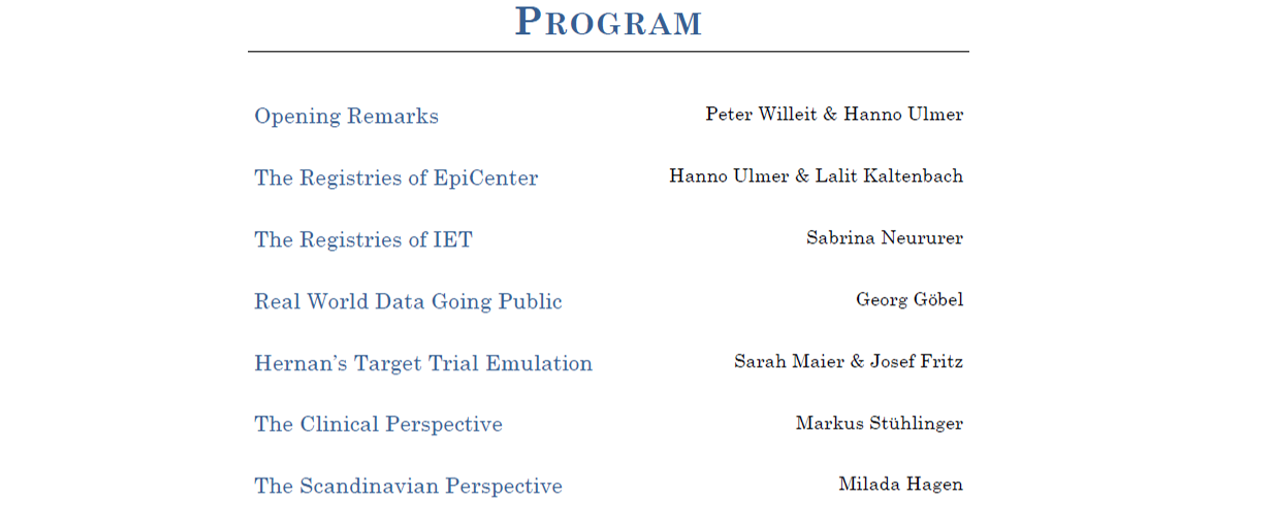
The event was opened by Peter Willeit and Hanno Ulmer, who presented the registry activities of the EpiCenter. They highlighted how long-term and well-maintained registries allow researchers to observe trends and outcomes that cannot be captured in shorter studies.
Real-world data and new methodological approaches
During the symposium, several speakers presented perspectives on the use of registry data in research and clinical practice.
A presentation by Georg Göbel, National Node Director of BBMRI.at addressed the topic “Real World Data Going Public”. He discussed the opportunities of making registry data more accessible for research, while also underlining the importance of clear governance, standardisation, and strong data protection. Also, the upcoming EHDS implementation was discussed.
Further talks included methodological approaches such as target trial emulation as well as clinical perspectives on the practical use of registries in patient care.
Learning from Scandinavian registry models
The symposium also looked at international experiences. A presentation by Dr. Milada Hagen on the Scandinavian registry landscape showed how long-term investment in national health registries has created strong infrastructures for research and public health evidence.
The discussions made clear that the future of registry data will depend on close cooperation between clinicians, researchers, and data experts to transform high-quality data into knowledge that benefits patients and healthcare systems.