

Nagoya Protocol–aligned guidance for microbiome biobanking and research –MICROBE project publications with BBMRI.at contribution
Two new open access publications from the EU-funded MICROBE project address key legal and practical challenges in microbiome research under different UN frameworks, and specifically the Nagoya Protocol. With the contribution of BBMRI.at, Austria plays an active role in shaping best practices for global microbiome biobanking and Access and Benefit-Sharing (ABS) compliance.
About the two publications
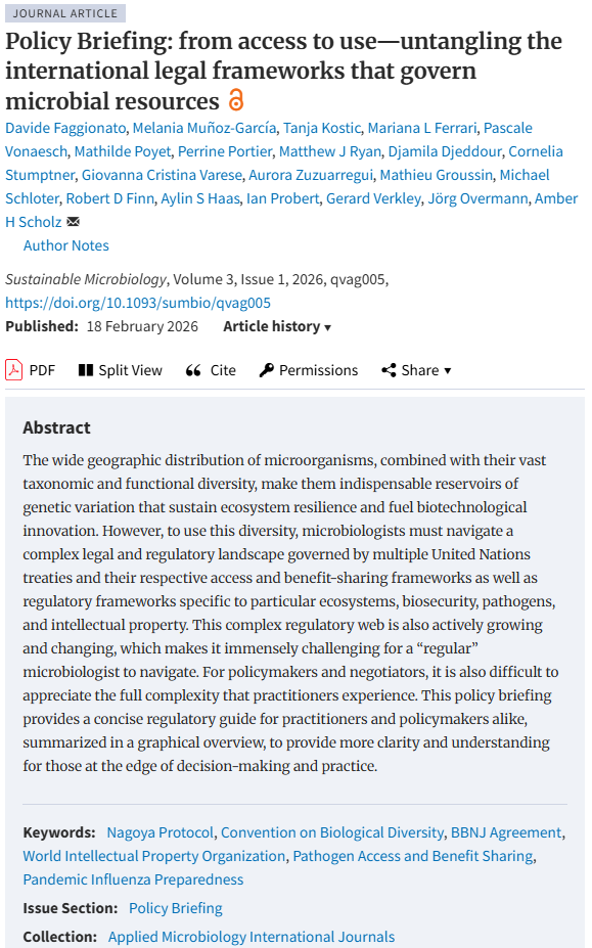
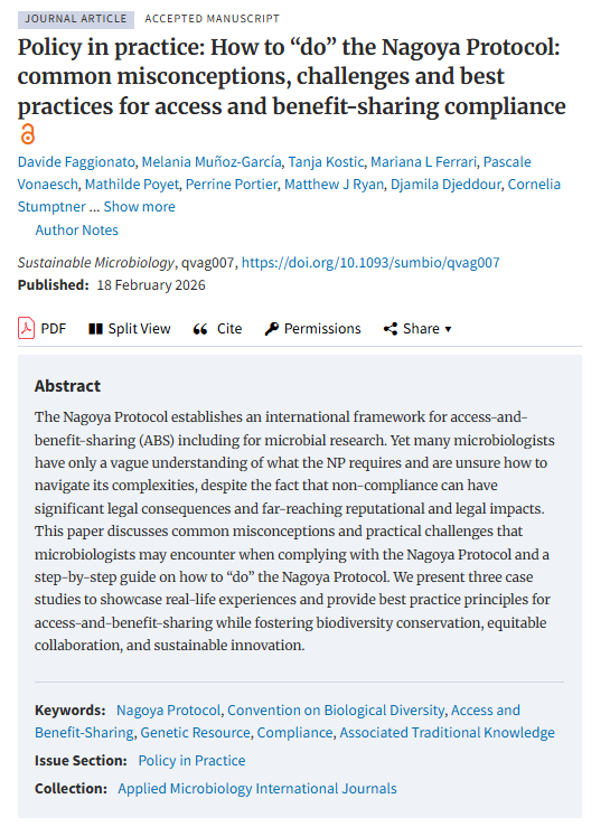
The two articles published consecutively in the same issue of Sustainable Microbiology, introduce a review of the international legal frameworks governing microbial resources. The second article then examines the implementation of the Nagoya Protocol in microbiome research, providing much-needed guidance on how Access and Benefit-Sharing (ABS) requirements under the Nagoya Protocol apply to microbiome materials. They address core concepts and common pain points, such as the regulatory landscape that microbiologists must comply with, differing national implementations, and practical aspects of documentation and benefit-sharing.
The authors translate these complex issues into actionable infographics and concrete recommendations that laboratories, biobanks, and research infrastructures can put into practice. The publications offer a pragmatic roadmap for compliant access, storage, sharing, and reuse of microbiome resources, supporting robust and collaborative science across borders.
Why the Nagoya Protocol matters for microbiome research
Microbiome materials and their associated data are central to advancing biomedical, environmental, and translational research. At the same time, researchers must comply with the ABS obligations of the Nagoya Protocol, which are implemented differently across countries and can be difficult to implement in practice.
Key issues include the definition of human-derived microbiome samples as genetic resources, the need to document provenance and permissions, and how to ensure fair benefit sharing. The clear and actionable guidance provided by the two articles is therefore instrumental to enabling high-impact science supported by biobanks and culture collections while meeting legal and ethical requirements.
BBMRI.at’s contribution through Medical University of Graz
Cornelia Stumptner (Medical University of Graz) – also a member of the EU-funded MICROBE project on microbiome biobanking – contributed to both publications, bringing in biobanking research infrastructure perspective.
Building on BBMRI.at’s experience in interoperable, ethically and legally compliant biobanking, this contribution supports the practical implementation of the Nagoya Protocol. It also aligns with BBMRI-ERIC’s broader efforts to harmonise biobanking standards across Europe, strengthening Austria’s role in shaping European guidance for microbiome research in the human and non-human fields.
From MICROBE to implementation
Developed as product of the EU project MICROBE, the publications bridge legal and policy frameworks with real-world implementation. The project supports the development of practical procedures, templates, and guidance for microbiome researchers, helping translate policy and legal requirements into workflows that can be applied in biobanking and research.
Read the published articles:
Davide Faggionato, Melania Muñoz-García, Tanja Kostic, Mariana L Ferrari, Pascale Vonaesch, Mathilde Poyet, Perrine Portier, Matthew J Ryan, Djamila Djeddour, Cornelia Stumptner, […], Amber H Scholz, Policy Briefing: From access to use – Untangling the international legal frameworks that govern microbial resources, Sustainable Microbiology, 2026;, qvag005, https://doi.org/10.1093/sumbio/qvag005
Davide Faggionato, Melania Muñoz-García, Tanja Kostic, Mariana L Ferrari, Pascale Vonaesch, Mathilde Poyet, Perrine Portier, Matthew J Ryan, Djamila Djeddour, Cornelia Stumptner, […], Amber H Scholz, Policy in practice: How to “do” the Nagoya Protocol: common misconceptions, challenges and best practices for access and benefit-sharing compliance, Sustainable Microbiology, 2026; vag007, https://doi.org/10.1093/sumbio/qvag007